01
GO
We visit a place connected to the ideas we are studying.
The world is our classroom. A field-based writing and humanities experience for high-school homeschool students in Nashville.
Instead of beginning with a blank page, students begin with an experience.
They listen to a book, essay, podcast, or other text connected to where we are going.
Then we go.
We explore a real place. We observe. We walk. We notice. We ask questions. We gather information. We look at the story, the history, the people, the environment, and even the economics behind what we are seeing.
Then we write.
Write Wild Child is built around high-school English Language Arts while intentionally incorporating:
Real experiences + meaningful academic work.
We visit a place connected to the ideas we are studying.
Students slow down, observe, and practice intentional noticing through outdoor and sensory-based activities.
We ask questions from multiple disciplines.
We begin with a book, audiobook, essay, podcast, videos, and curated texts that give context to the experience.
Students move from short-answer writing to comparison, research, thesis development, longer-form work, and a final Lord’s Prayer creative writing project that will be published.
At the end of the season, students present what they discovered, developed, and learned.
Because every moment we have on this Earth is a gift. And we are lucky enough to be the screenwriter of the best movie we will ever experience.
Throughout the season, students build a full writing toolkit, from quick responses to a polished piece of creative writing.
Each student works toward a final Lord’s Prayer creative writing project and presentation, drawing on everything they gathered throughout the season. Learn about the project →
Many believe the Lord’s Prayer carries one of the highest vibrations on the planet. Even people who aren’t Christian will play it in a space to raise the vibration of the room.
When you consider the sections of the prayer, there are stanzas, and those stanzas relate to important principles for life.
Everyone in life has stories that fall under these categories. In this program, we will collect these stories and publish them as a book. The Lord’s Prayer Project is an all-Nashville project: our students will be part of it alongside other Nashville groups, gathering stories across many communities and generations.
Each student works toward a final Lord’s Prayer creative writing project and presentation, drawing on everything they gathered throughout the season. Every student’s Lord’s Prayer project will be published.
The fall season includes:
We start listening, exploring, and gathering evidence.
Trips across Tennessee and Kentucky, each paired with a writing lab.
No required work, so families can enjoy the holiday together.
Students present their Lord’s Prayer creative writing projects and complete their portfolios.
We celebrate the season, the writing, and each other, and open the doors to friends who want to join next semester’s class.
It is an opportunity for students to learn how to:
Because life does not happen one subject at a time.
Neither should learning.
Anyone can read Catie Sullivan’s résumé and know she has never lived a 40-hour-workweek kind of life.
Since the 1990s, she has built a career around ideas, words, people, and breakthroughs — working behind the scenes with executives, authors, speakers, entrepreneurs, brands, and people whose names you would recognize.
If her computer could talk, it would have stories.
Catie has spent her career helping people take complicated ideas and turn them into something other people can understand, remember, and act on. She is a writer, ghostwriter, speechwriter, creative director, strategist, TEDx coach, producer, and lifelong pattern-watcher.
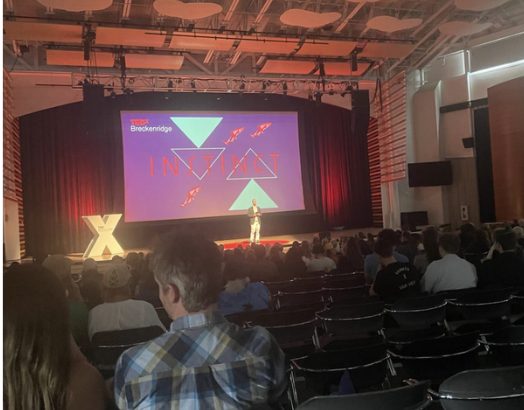 300speeches written a year
 6books
 6programs created a year
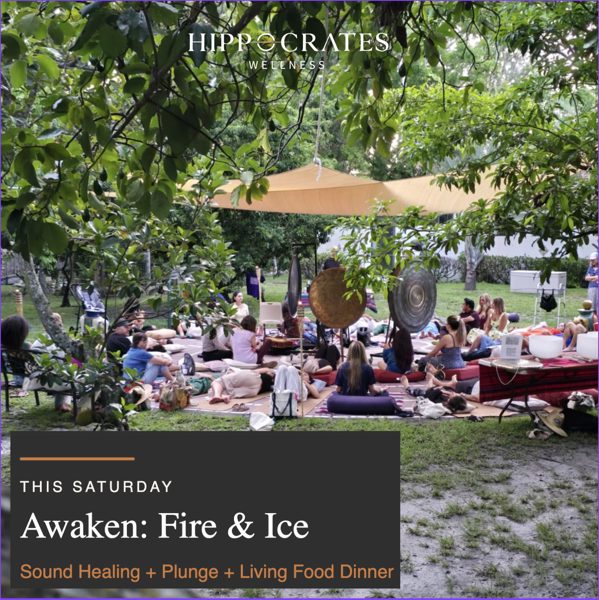 10+events a year as the creative mind behind them
She is the creative director of a documentary on forest therapy filmed in South Korea, and has served as fractional communications director for international programs.
But early on, she made herself one promise:
If she was willing to give that level of effort, creativity, and care to helping strangers have breakthroughs, she would give at least that much to her own children.
Catie has been homeschooling since 2012.
The same professionalism she brought to building books, speeches, companies, programs, and brands went into building an education around the two people who mattered most.
Her son is now attending the University of Lynchburg on academic scholarship.
And now her youngest — her baby blackbird — is a senior in high school.
This is the final year.
Since 2012, they have never spent time purely behind a desk. “Wouldn’t it be great if!” has been their motto since the beginning.
There have been no walls on their classroom.
Every lesson has been built on a project-based learning model.
Lessons have been “played” with friends’ kids logging in and joining from California to Virginia to New Hampshire and everywhere in between. In the elementary years, they were called “Parties with a Purpose”: class size 12 (+ siblings, of course).
The scavenger-hunt approach to learning, with real results: well-rounded writers and orators.
So for this final year, the question got even bigger:
What if the world really could be our classroom?
Their ultimate senior-year dream is inspired by How to Make an Apple Pie and See the World: go places, meet people, experience things, learn how the world works — and write about it.
So this year, they are opening their classroom to a small group of other high-school homeschool students who want to:
Go. See. Do. Explore. Write. Thrive.
That became Write Wild Child.
Catie believes students learn differently when they have something real to think about.
So instead of beginning with a blank page, students begin with an experience.
They listen to literature and ideas. They travel. They walk outside. They observe. They interview. They study history, people, economics, culture, nature, and place. They learn how to ask better questions.
Then they learn how to turn what they have discovered into clear thinking and clear communication.
Catie is a systems person. She has spent her life watching patterns and figuring out what makes communication work.
Those same principles matter in school.
And they may matter even more in an AI world.
AI can generate an answer remarkably quickly.
But a student still has to know what to ask.
They need to be able to think critically, recognize patterns, evaluate information, communicate clearly, and give a system enough context to produce something worthwhile.
In technology, there is an old principle:
Garbage in. Garbage out.
At Write Wild Child, we work on what goes in.
Because when young people learn how to think clearly and communicate what they mean, those skills go with them everywhere.
Georgia will join us on all four field experiences, leading forest therapy walks that help students slow down, notice, and truly arrive in the places we explore.
Georgia is Nashville’s first practicing certified Forest Therapy Guide with the Association of Nature and Forest Therapy, and has been guiding since 2019. She is also a licensed psychotherapist with a master’s degree in clinical mental health counseling.
Her love of nature connection took root while she was teaching English in Japan, where forest bathing is part of everyday life. She brings an open heart, curiosity, and creativity to every walk.
Forest therapy is the perfect partner for writing: it turns “look around” into real, sensory observation, the raw material of every good sentence.
Aimée leads our mindfulness program, giving students simple, practical tools to calm the mind, focus their attention, and bring a steadier, clearer self to every page they write.
A licensed behavior analyst and therapist on Hawaiʻi Island, Aimée integrates a background in cultural geography with a Master of Social Work (MSW). Through the Thrive First Initiative, she helps people reclaim well-being and reconnect with purpose.
She is also the host of The Ripple Effect podcast, built on her belief that when we take care of ourselves, the good ripples outward to everyone around us.
Mindfulness and writing go hand in hand: a quiet mind notices more, questions better, and finds the words that matter.
Write Wild Child is kept small so every student gets real attention in the field and on the page.
Three payments: October, November and December.
Submitting the form expresses interest and gives you first access to enrollment details, field-trip locations, and the calendar.